Black vinyl-coated or galvanized chain link: which one fits your property
Same wire, same basic design, different finish, and the right choice depends on what you want the fence to do in your view.
October 7, 2026 · 4 min read
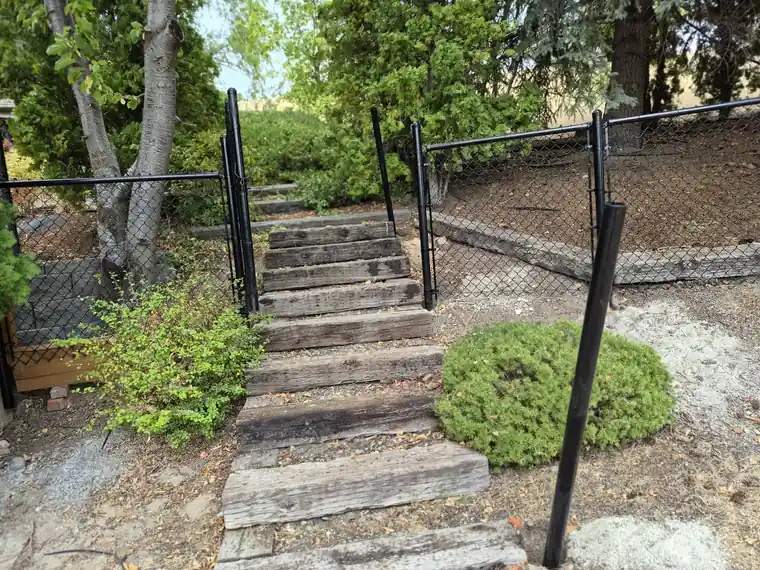
Chain link comes in two finishes most people will ever see. One is bare galvanized steel, the silver-grey kind that looks like a ball field. The other is black vinyl-coated, where a coating covers the wire and the fence nearly disappears against trees and lawn. Both are chain link. Both keep dogs and kids where they belong. Where they differ is in how they look, how they age and what they suit.
What you're actually choosing between
Galvanized chain link is steel wire with a zinc layer that guards against rust. It's the standard commercial finish, and it ages into a flat, dull grey that most people stop noticing. Vinyl-coated chain link usually starts with that same kind of wire and adds a colour coating on top, most often black. The coating is what you see, and it's what you're paying attention to when you decide.
The anatomy is the same either way: fabric (the woven wire), a top rail along the upper edge, line posts every so often, heavier terminal posts at ends and corners, and tension wire or a bottom rail to keep the fabric from lifting. Finish is a surface decision. The structure underneath is what holds the fence up.
Where black makes sense
Black wins when the fence sits in your view. Dark, thin wire fades into the background, so you look through it at the lawn, trees and hills instead of at the fence itself. That's why black chain link shows up around yards, gardens and hillside lots, and why it looks right wrapped around a lawn in autumn colour.
MF Fencing did a 4-foot black chain link job on a property with retaining walls and terraced steps, and the photos show a black gate sitting at the foot of timber steps on a hillside. Fence on stepped ground is awkward for most materials. Chain link fabric flexes to follow the ground, and the terminal posts and gate frames can be set to suit the walls, which is why it's a common answer on a terraced yard. They also set black chain link on top of a block retaining wall. The black keeps the fence light enough that the wall stays the feature.
Where galvanized makes sense
Galvanized fits work areas, long runs and anywhere the fence is there to do a job without being pretty. MF Fencing finished a 6-foot galvanized chain link job for an old gym that became a new business, and it included a man gate, a double drive gate and a 28-foot slide gate. A fence like that needs to be tall, tough and easy to repair, and nobody's admiring the finish. Galvanized also tends to suit the rough handling that commercial fences get.
There's one more reason to think about the coating. Vinyl can get nicked or scratched where something drags across it, and the metal underneath is exposed at that spot. A galvanized fence has nothing to chip. If the fence will be hit by trucks, mowers, trailers or the back of a pallet jack, bare galvanized is simpler to live with.
Dog runs, slopes and shade sails
- Dog runs: height matters, and so does the bottom edge. A tension wire or bottom rail along the ground keeps the fabric from lifting, and a dog that digs needs the bottom detail thought through before the fence goes up.
- Slopes: chain link follows the ground better than rigid panels. A run down a hillside can follow the slope instead of stepping in short sections.
- Yards you look at every day: black, because the fence blends into the view.
- Back lots, work areas and utility spaces: galvanized, because it's plain and fast to repair.
- Add-ons: chain link posts can carry more than fabric. Jim Hilton hired MF Fencing for a fence and for poles to hold a shade sail, and wrote that they did a "great job on my chain link fence and poles for my shade sail".
A simple way to decide
Start with who looks at it. If it's your own back yard, black almost always looks better than bare steel, and the extra step is worth it. If it's a lot behind a building, galvanized is fine and nobody will mind. Next, think about how it will get used. A fence that gets leaned on, bumped and driven past needs to take the abuse. A fence around a garden doesn't.
Finally, think about height. Four feet keeps most pets and young kids in and is easy to see over. Six feet is the usual choice when you want the boundary to mean something, or when the fence is protecting equipment or a work area. Check with the City of Yakima or your county before you build, so you know what applies to your lot, and call 811 before any digging starts.
MF Fencing builds both finishes, in 4-foot and 6-foot heights, around Yakima and the Yakima Valley. For a bid, call (509) 594-9013 or email mffencingllc@gmail.com. Dustin Owen will look over the site and tell you which finish he'd pick for it.
MF Fencing LLC, (509) 594-9013
Call (509) 594-9013More articles
Why the posts matter more than the boards on a cedar privacy fence
The boards are what the neighbours see, but the posts decide whether the fence is still straight years from now.
What to check on your fence and gate after a wind storm
A fence usually tells you where it's hurt, if you know where to look, and most of the time the answer is a repair rather than a rebuild.