Why the posts matter more than the boards on a cedar privacy fence
The boards are what the neighbours see, but the posts decide whether the fence is still straight years from now.
October 7, 2026 · 4 min read
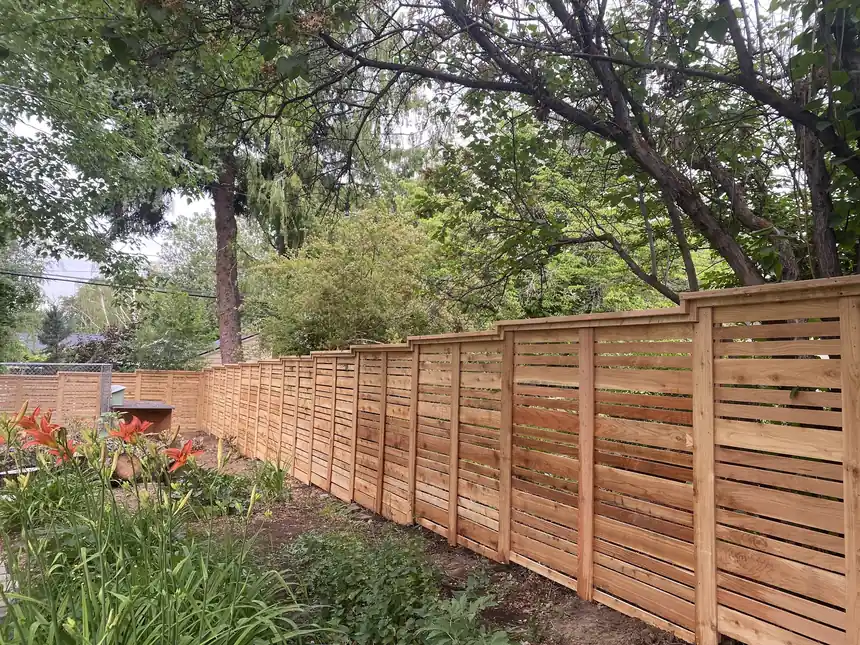
Most people judge a fence by its boards. Cedar looks good, a clean row of horizontal boards photographs well, and the posts get a quick glance at best. That's backwards. The boards are the cladding. The posts are the fence. If a post leans, rots at the base or works loose in the ground, the best cedar in the Yakima Valley leans right along with it.
What a post actually has to do
A privacy fence is a wall with no gaps for the wind to slip through. Every board adds surface, and the wind load on that surface travels down through the boards into the posts, and then into the soil. On a blustery day a tall solid fence is asking its posts to act like levers, trying to pull themselves out of the ground. Cedar is also heavy, especially when it's wet, so the posts carry weight as well as wind.
Posts also live in the one place a fence can't hide from the weather. Wet soil, dry soil and soil that freezes and thaws all push on whatever is buried in them. Nothing else in your fence gets that treatment around the clock, and nothing else is as hard to swap out later.
Where metal posts earn their place
Wood posts are the common choice, and plenty of good fences stand on them. The weak spot is the stretch around ground level, where wood stays damp, dries out, and gets damp again. That's where rot tends to start, out of sight, until a windy week shows you the lean.
A metal post doesn't rot. It can be sized to suit the height of the fence, it stays straight, and the cedar fastens to it like a frame. The cedar still does everything you see, with the colour and grain people buy cedar for. The metal does the structural work where nobody looks. Cindy Byrne put it well in her Google review of MF Fencing: "The natural beauty of the cedar is spectacular and the hidden strength of the metal posting is brilliant". Hidden is the point. You shouldn't have to think about the posts once they're in, which is exactly why they need to be right the first time.
Horizontal boards raise the stakes
Horizontal cedar is a popular look, and MF Fencing builds it: long, level runs of board that follow the line of a yard. Because the lines run sideways, any post that's out of plumb or out of line shows up fast. Your eye follows the boards and catches the one post that doesn't match. Boards that span a long gap between posts can also bow or sag as cedar dries and moves, so post spacing is part of the design, not an afterthought.
Horizontal runs on a slope need a plan too. The fence can follow the ground or step down in sections, and the posts have to be set to suit whichever one you pick. It's worth asking how a contractor intends to handle it before the first hole is dug, not after the third board is up.
Questions worth asking before you accept a bid
- What are the posts made of, and how are they set in the ground? A good contractor can explain it in plain words.
- How far apart will the posts be? Wider spacing puts more load on each post and more span on each board.
- How are the posts kept plumb while the footing sets?
- What's different at the gates? Gate posts carry more than the rest, because a swinging gate pulls sideways on its post every time it opens and closes.
- What's the plan where the ground slopes or changes level?
None of these need a technical answer. They need a straight one. If you get a confident explanation, that tells you something. If you get a shrug, that tells you something too.
Cedar is the easy part
Cedar weathers. Left alone it fades toward silver-grey, which some people love and some don't. If you want to hold the warm colour, plan on a sealer or stain and a fresh coat as the finish wears. Cedar also stands up to moisture and insects better than most woods, which is why it's the usual pick for fences. And boards are replaceable: swapping one takes an afternoon. A buried post that's tied into the whole fence line is a different job entirely, which is why the part you can't see deserves most of your thinking.
One practical note. Call 811 before anyone digs, whoever is doing the digging, so buried lines get marked. And check with the City of Yakima or your county before you build, so you know what applies to your lot.
MF Fencing is a licensed, insured and bonded fence and gate contractor in Yakima (Washington licence MFFENFL804RS, active). Owner Dustin Owen comes out to look at the job and talks through the options with you. For a bid on a cedar fence, call (509) 594-9013 or email mffencingllc@gmail.com.
MF Fencing LLC, (509) 594-9013
Call (509) 594-9013More articles
Black vinyl-coated or galvanized chain link: which one fits your property
Same wire, same basic design, different finish, and the right choice depends on what you want the fence to do in your view.
What to check on your fence and gate after a wind storm
A fence usually tells you where it's hurt, if you know where to look, and most of the time the answer is a repair rather than a rebuild.